
People love to compare language models by how many billions of parameters they have, as if that single number tells the whole story. Spend enough time actually building with these models and a different number starts to matter more day to day. The context window. It decides how much the model can look at in one go, and it shapes how smart, how forgetful, and how expensive your AI feels in ways the parameter count never hints at.
What the window actually is
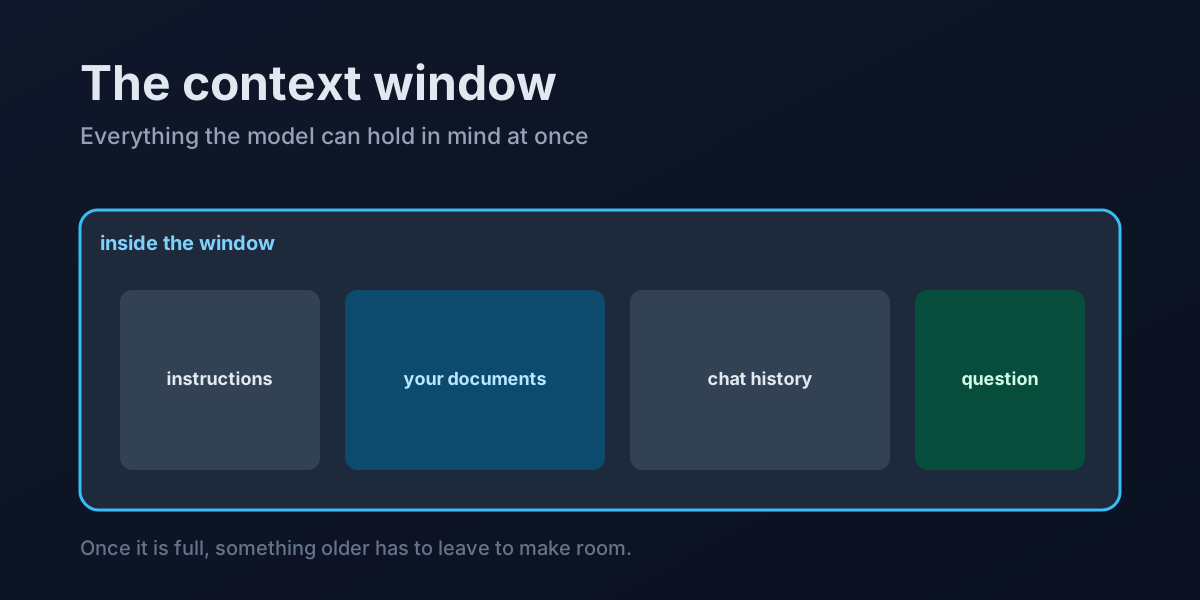
A language model does not have memory the way you and I do. It does not quietly remember your last conversation. Every time it answers, it is handed a block of text, it reads that block, and it responds. The context window is the maximum size of that block. Everything the model knows in the moment has to fit inside it.
Text gets measured in tokens, which are chunks a bit smaller than words. A rough rule is that a token is about three quarters of a word, so a thousand tokens is roughly seven hundred and fifty words. When someone says a model has a context window of two hundred thousand tokens, they mean it can take in something like a few hundred pages of text before it runs out of room.
The window is a shared budget
The catch that trips people up is that the window is not just for your question. It has to hold everything at once. The hidden instructions that set the model's behaviour, any documents you fed in, the running history of the conversation, and the space reserved for the reply all draw from the same pool.
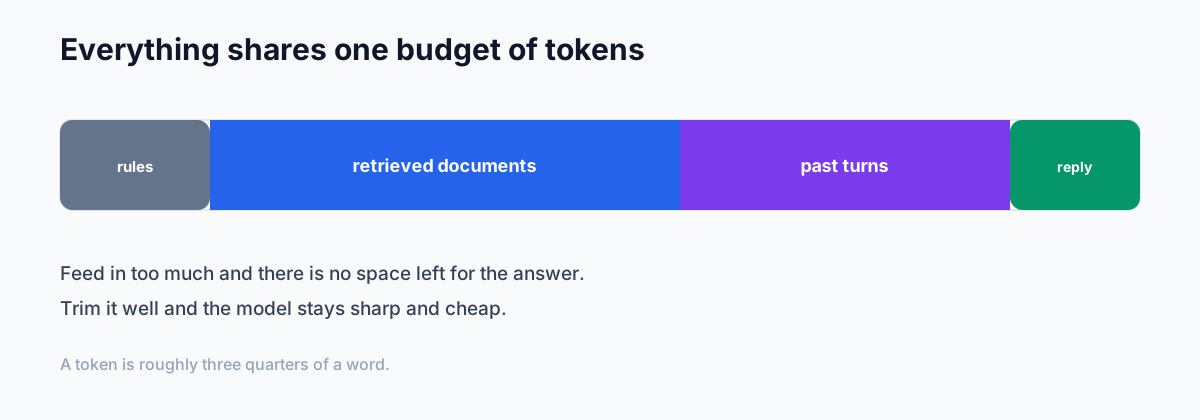
This is why a chatbot can seem to forget what you said earlier in a very long chat. It has not developed amnesia. The oldest turns simply fell out of the window to make space for newer text. It is also why stuffing an entire manual into a prompt can backfire. If the documents eat the whole budget, there is barely any room left for the answer.
Bigger is not automatically better
When models started shipping with enormous windows, it was tempting to think the problem was solved. Just pour everything in. Reality is more subtle, in two ways.
The first is cost and speed. The way attention works, the effort of processing a prompt grows faster than the length itself. Double the text and you more than double the work. A giant prompt is slower to answer and costs more every single time, so filling the window just because you can is a quiet tax on every request.
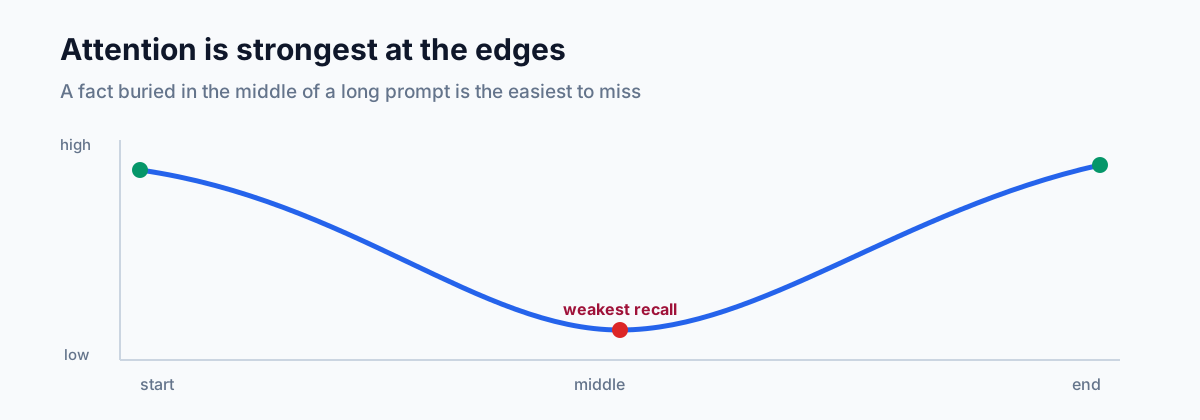
The second is accuracy, and this one surprises people. Models tend to pay the most attention to the beginning and the end of a long input, and they can gloss over things sitting in the middle. If you bury the one crucial fact halfway through a very long prompt, there is a real chance the model reads right past it.
Working with the window instead of against it
Once you respect these limits, a few habits make everything better.
Put the most important material where the model looks hardest, near the top or the very end, not lost in the centre. Trim ruthlessly, because a short prompt of only relevant text usually beats a huge one padded with noise. Rather than dumping a whole knowledge base into every request, retrieve just the handful of pieces that matter, which is exactly what retrieval augmented generation is for. And for long running conversations, summarise the older parts into a short recap rather than dragging every message along forever.
The real reason it matters
The context window is the model's working memory, and like any working memory, its size and how you fill it change the quality of thought that comes out. A brilliant model handed a bloated, disorganised prompt will underperform a modest model given a clean, well ordered one.
So the next time you compare AI systems, do not stop at the headline about parameters. Ask how much they can hold at once, and just as importantly, ask how carefully that space is being used. In practice, the second question is usually where good AI products are won or lost.