
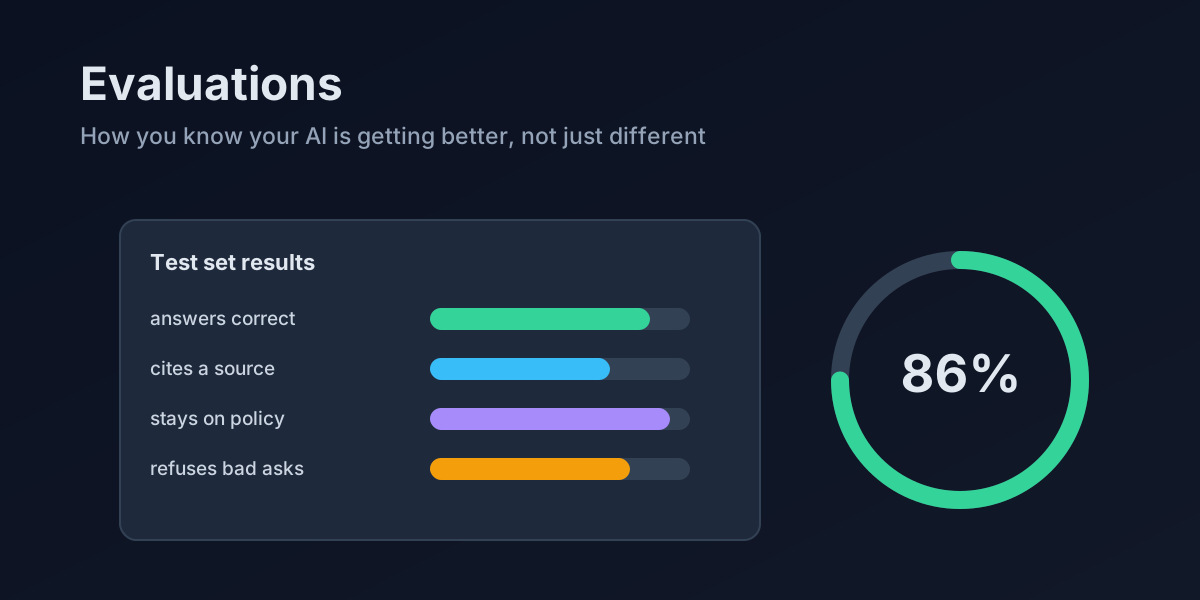
There is a moment every team building with AI goes through. The demo works, everyone claps, and then you try to make it better. You tweak the prompt, the answer changes, and someone asks a simple question that suddenly feels impossible to answer. Is it actually better now, or just different? Without a way to measure, you are decorating by feel. Evaluations, usually shortened to evals, are how you get an honest answer, and they are the least glamorous, most important habit in the whole field.
Why vibes stop working fast
In the early days of a project, judging quality by eye is fine. You read a few answers, they seem good, you move on. The trouble is that language models are full of trade offs. Fix the prompt so it stops rambling, and it might start refusing reasonable requests. Add an instruction to be more careful, and it might get slower and more evasive. Every change helps some cases and quietly hurts others.
Reading a handful of examples cannot catch that. You will notice the case in front of you and miss the ten you did not look at. This is how teams end up shipping a change that felt like an improvement and made real users unhappy. The only cure is to stop trusting the vibe and start counting.
What an eval actually is
An eval is not complicated. At its heart it is a test set, a collection of example inputs paired with a way to score the output. You gather a set of realistic questions, ideally including the tricky ones and the ones that have bitten you before. You run your system on all of them. Then you score how it did on each, and you get a number.
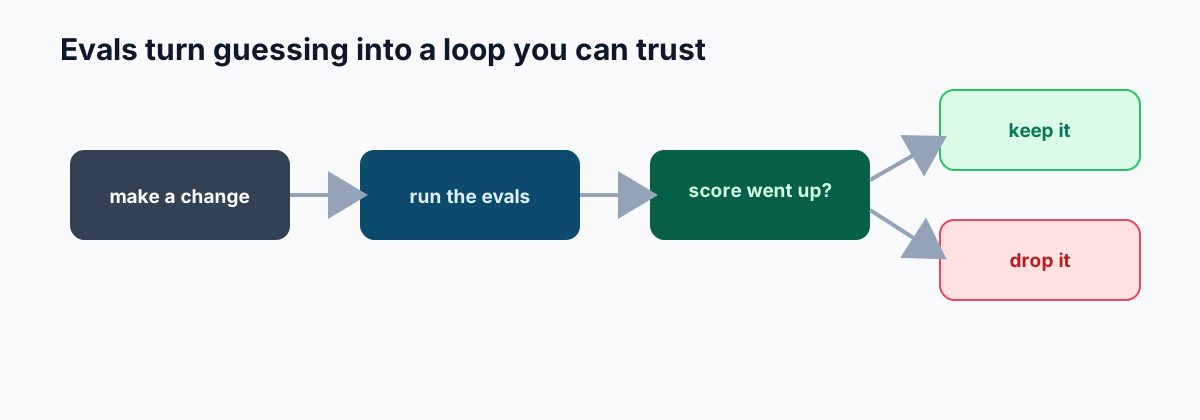
That number is the whole point. Once you have it, you can change something, run the same set again, and see the number move. Progress stops being a feeling and becomes a measurement you can defend.
Three ways to score an answer
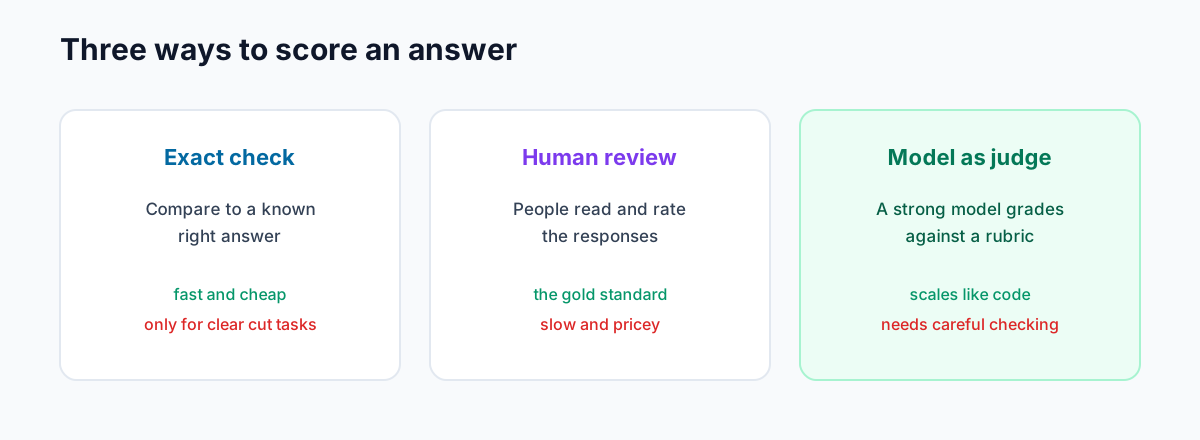
The hard part of evals is the scoring, because language is slippery. There is rarely one exact right wording. Teams generally reach for three approaches, and good setups mix them.
The first is an exact check, where you compare the output to a known correct answer. This is perfect for tasks with a clear result, like did it return the right category or the right number. Fast, cheap, and objective, but useless for anything open ended.
The second is human review, where real people read the answers and rate them against a guideline. This is the gold standard for quality and nuance, and also the slowest and most expensive option, which means you cannot run it on every change.
The third has become popular because it splits the difference. You use a strong model as the judge, handing it the answer and a clear rubric and asking it to score. This scales almost like code, so you can run it constantly. The catch is that the judge can be fooled or biased, so you have to check the judge against human ratings now and then to make sure it agrees.
Measuring more than correctness
A good eval rarely tracks a single number, because a useful answer has several qualities at once. You might measure whether the answer is factually correct, whether it cites a real source, whether it stays within your policies, whether it refuses the requests it should refuse, and whether it keeps a consistent tone. Watching all of these together is what stops you from improving one thing while breaking another without noticing.
This is also where evals connect to everything else in AI. Building a retrieval system? An eval tells you whether it is fetching the right documents. Writing a system prompt? An eval tells you whether your careful wording actually helped. Comparing two models? The eval is the only fair way to decide.
Start smaller than you think
The mistake people make is imagining evals as a huge, formal project, so they never begin. In reality you can start with twenty examples in a spreadsheet. Twenty realistic cases, each with a note on what a good answer looks like, already beats guessing by a mile. You grow the set over time, and a great source of new cases is your own failures. Every time the system messes up in the wild, add that example so it can never quietly regress again.
The quiet reason this wins
The teams that build AI you can actually rely on are not necessarily the ones with the fanciest prompts or the biggest models. They are the ones who turned quality from an argument into a measurement. When you can change something and immediately see whether it helped, you improve quickly and safely. When you cannot, you are just moving in the dark and hoping.
Evals will never be the exciting part of an AI project. They are the seatbelt, not the engine. But they are exactly what lets you drive fast without ending up in a ditch, and that is why the people who ship the good stuff never skip them.