
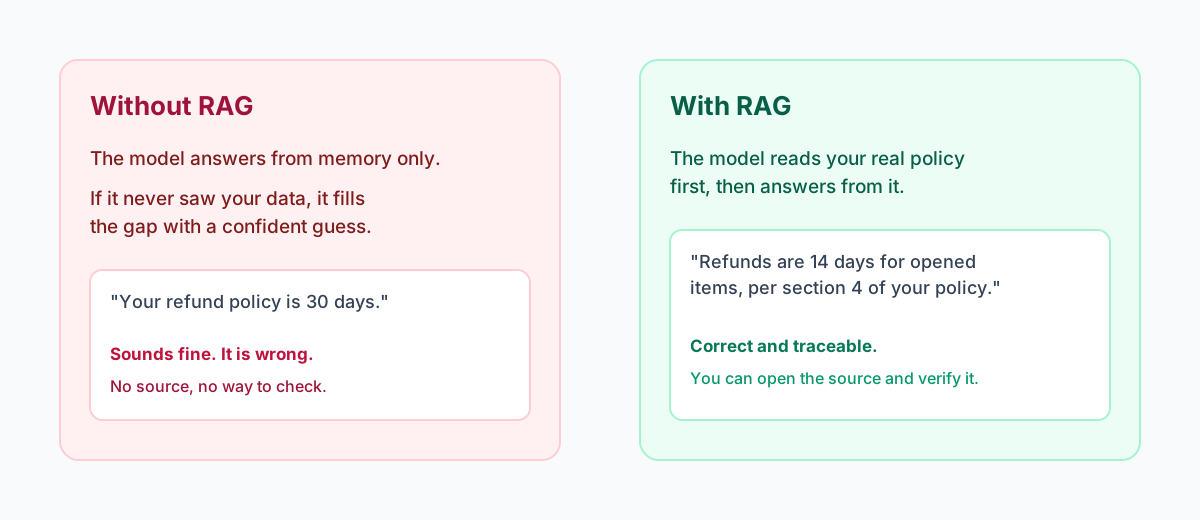
The first time I watched a chatbot invent a refund policy for a company I worked with, I stopped trusting raw language models for anything that touches real facts. The answer sounded perfect. It was also completely made up. That moment is exactly the problem Retrieval Augmented Generation was built to fix, and once you understand it, a lot of modern AI products suddenly make sense.
The gap between sounding right and being right
A language model like Claude or ChatGPT learns patterns from a huge pile of text. What it does not have is a live copy of your handbook, your product catalog, or last week's meeting notes. So when you ask about something private or recent, it does the only thing it can. It predicts a plausible answer from memory. Sometimes that memory is accurate. Sometimes it is a smooth, confident guess that happens to be wrong.
People call this hallucination, but I think that word makes it sound rarer than it is. The model is always guessing. We only notice when the guess lands somewhere we can check.
The simple trick behind RAG
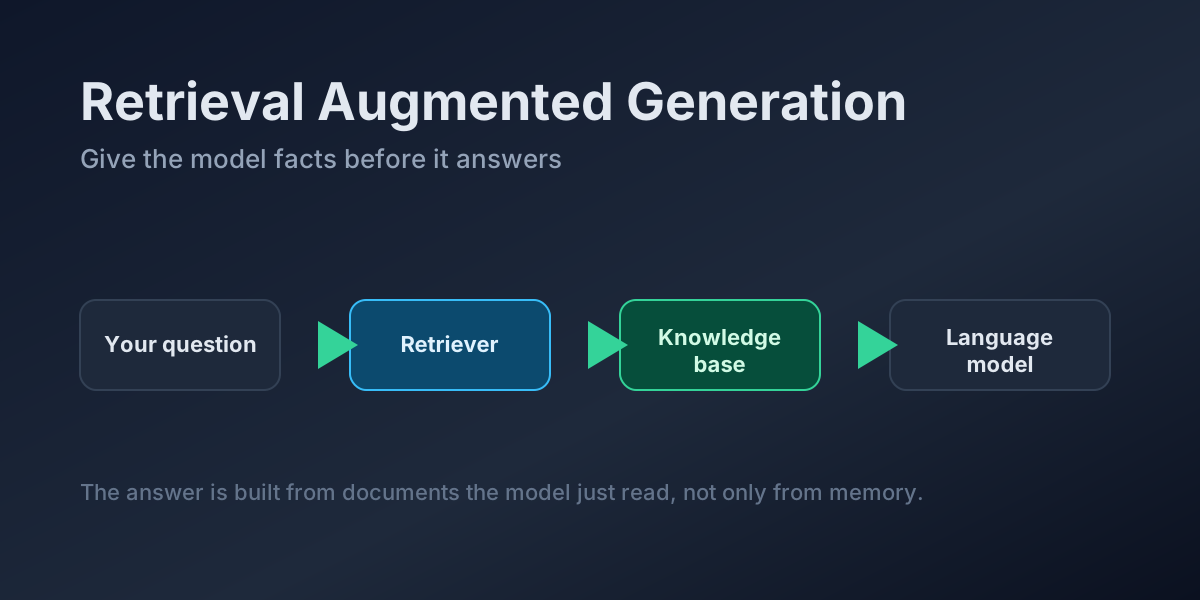
RAG changes the order of events. Instead of asking the model to answer straight away, you first go and fetch the relevant facts, then hand those facts to the model along with the question. Now the model is not reaching into a fuzzy memory. It is reading a short, fresh document that you placed right in front of it.
That is really the whole idea. Retrieve first, then generate. The name is clunky, but the mechanic is honest.
How the retrieval actually works
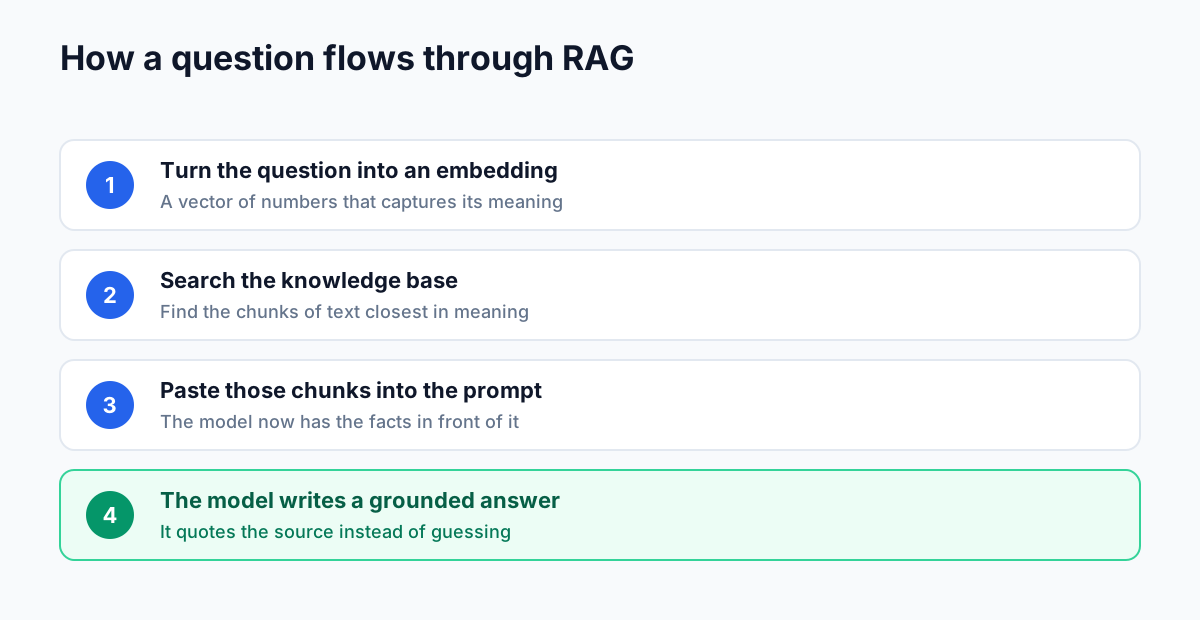
You might expect the search step to be a normal keyword match, the kind a website search box does. It is smarter than that. Every chunk of your documents gets turned into a list of numbers called an embedding, which captures the meaning of the text rather than the exact words. Your question gets the same treatment. Then the system looks for the chunks whose meaning sits closest to the question.
Because it matches on meaning, a question about "getting my money back" can still find a paragraph titled "returns and refunds," even though the words never overlap. That is the quiet magic that makes the whole thing feel intelligent.
Those chunks live in a vector database, which is just a store built to find nearest neighbours in this space of meaning very quickly, even across millions of entries.
Why this beats retraining the model
A fair question is why not simply teach the model your data directly. You can, and that process is called fine tuning, but it is heavy. You need a training run every time your documents change, and the model still blends your facts into its general memory, where they can blur.
RAG keeps your knowledge outside the model, in a place you control. Update a document and the next answer already reflects it. Nothing to retrain. You also get something fine tuning cannot easily give you, which is a paper trail. Since the answer came from specific chunks, you can show the source next to the reply and let a person verify it.
Where it shines and where it struggles
RAG is a strong fit whenever the truth lives in a body of text that changes over time. Customer support built on your own policies, an internal assistant that reads company wikis, a research tool that answers from a folder of papers. In all of these, grounding the model in real documents turns a fun demo into something you can actually ship.
It is not a cure for everything, though. If your documents are messy, the retrieval pulls messy chunks, and the answer inherits that mess. Garbage in, garbage out did not disappear. The quality of a RAG system is mostly the quality of how you split, clean, and index your text, not the cleverness of the model on top.
A mental model you can keep
Think of a sharp new employee on their first day. They are smart and well spoken, but they do not know your business yet. You would never let them answer a customer by memory alone. You would hand them the policy binder and say read this, then reply. RAG is that binder for a language model. The intelligence was always there. What it needed was the right pages open at the right moment.
If you are building anything where wrong answers cost you trust, this is the pattern to reach for first. It is not the flashiest idea in AI, but it might be the most useful one for real work.