
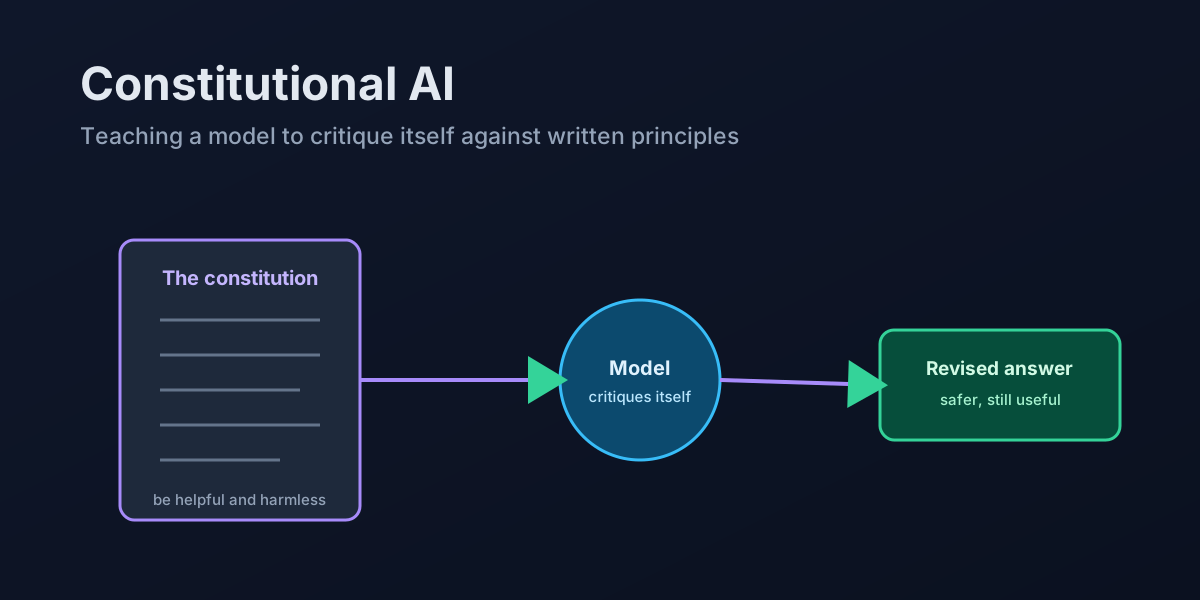
Every capable language model faces the same awkward question. How do you get something that can write anything to refuse the harmful stuff without turning it into a useless scold that says no to everything? Anthropic's answer, the method behind Claude, has a name that sounds grand and an idea that is refreshingly practical. Constitutional AI. Once you see how it works, a lot of the debate about AI safety becomes easier to follow.
The problem with training on human reactions alone
The common way to shape a model's behaviour is to have people rate its answers. Show a human two replies, ask which is better, and use those judgements to nudge the model toward the preferred style. This works, and it is a big part of why modern chatbots feel polite and helpful. But it has real downsides.
It is slow and expensive, because every judgement needs a person. It is inconsistent, because different reviewers disagree and get tired. And when the content is disturbing, you are asking human workers to read a great deal of unpleasant material, which is its own ethical problem. Relying only on human feedback does not scale gracefully.
Writing the rules down
Constitutional AI starts from a different place. Instead of leaving the values implicit in thousands of human ratings, it writes them out as an explicit set of principles, the constitution. These are plain statements about how the model should behave. Prefer answers that are helpful and honest. Avoid responses that are harmful, deceptive, or that help someone break the law. Treat the user with respect. The principles are drawn from widely shared sources on human rights and good conduct, and the point is that they are visible and can be discussed, rather than hidden inside a pile of labels.
Making the values legible is itself part of the pitch. You can argue about a written principle. You cannot argue with a vague vibe absorbed from crowd workers.
Letting the model check its own work
Here is the move that makes the method distinctive. Rather than have humans catch every bad answer, the model is taught to critique itself against the constitution.
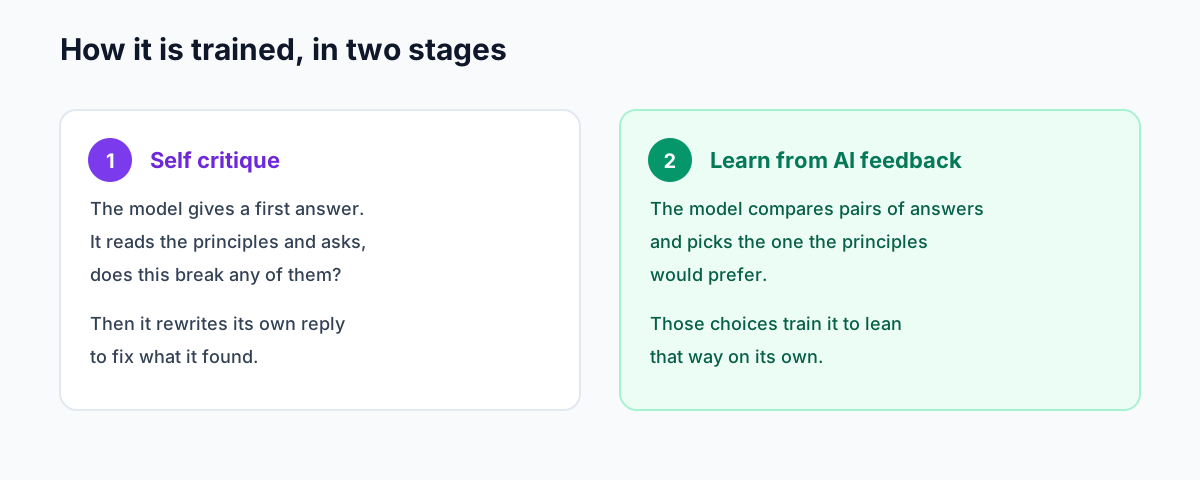
In the first stage, the model produces an answer, then is prompted to look back at it through the lens of the principles and ask whether it crossed any lines. If it did, it rewrites the answer to fix the problem while keeping what was useful. Do this across a huge range of prompts and you build a collection of improved, self corrected responses that the model then learns from.
The second stage replaces the human raters with the model itself acting as a judge. Given two possible answers, the model decides which one better fits the constitution, and those preferences train it to lean the right way automatically. Because the feedback comes from the model applying written principles rather than from people, the process scales in a way that pure human labelling never could.
Why this is more than a cost saving
It would be easy to read this as just a cheaper way to do the same job, but the deeper appeal is transparency and control. When behaviour comes from a written constitution, you can point to the exact principle behind a refusal. You can revise a principle and retrain, rather than reassembling an army of reviewers. The values are a document you can inspect, not a black box of accumulated opinions.
It also aims at a specific failure mode. Models trained only to avoid harm can become timid, refusing perfectly reasonable requests out of caution. A constitution can explicitly say be helpful and only refuse when there is genuine risk, which pushes the model toward being useful and safe at the same time, instead of trading one for the other.
The honest limits
None of this makes a model perfectly safe, and it is worth being clear about that. The constitution is written by people, so it carries their blind spots and choices. A model can still misread a principle, or be talked around it by a cleverly worded prompt. Deciding which values belong in the document at all is a hard, contested question that no clever training loop resolves.
What Constitutional AI offers is not a finished solution but a better handle on the problem. It turns a fuzzy goal, make the AI behave, into something more concrete, write down what behaving means and train the model to hold itself to it. In a field where so much feels opaque, moving the values out into the open and letting the model reason about them is a genuinely useful step, and it is a big part of what sits behind the Claude you talk to.