
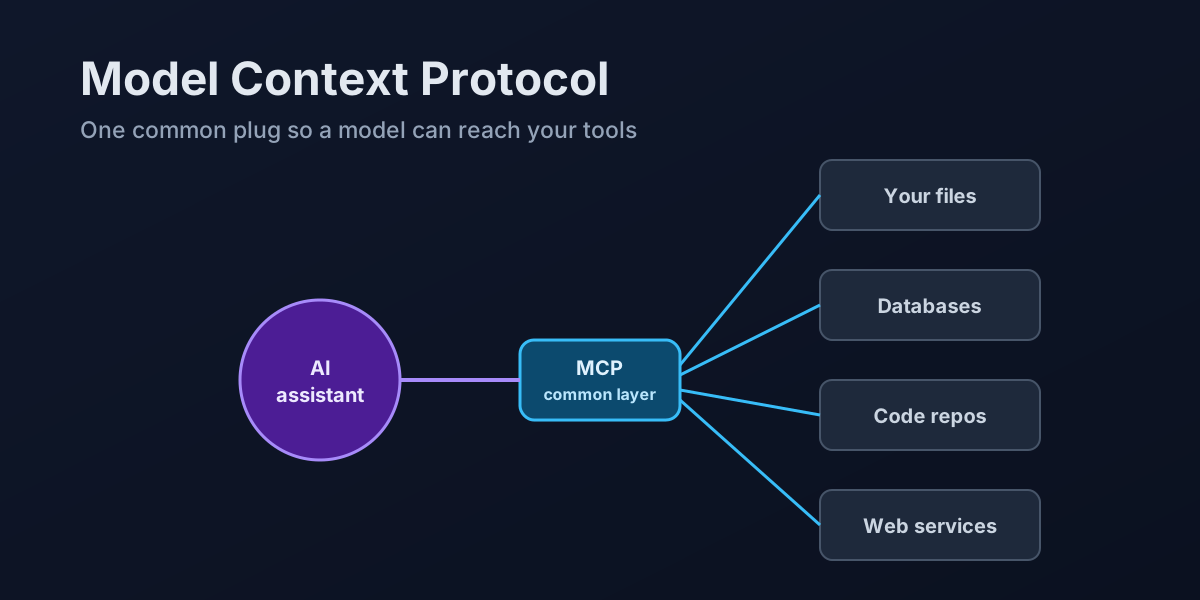
A language model on its own is a brilliant conversationalist locked in a room with no windows. It can reason and write beautifully, but it cannot see your calendar, read your codebase, or check today's numbers unless someone opens a door for it. For a while, opening each door meant writing a bespoke piece of glue code. The Model Context Protocol, usually shortened to MCP, is an attempt to replace all that glue with a single, shared standard, and it has quietly become one of the more important ideas in practical AI.
The problem it solves
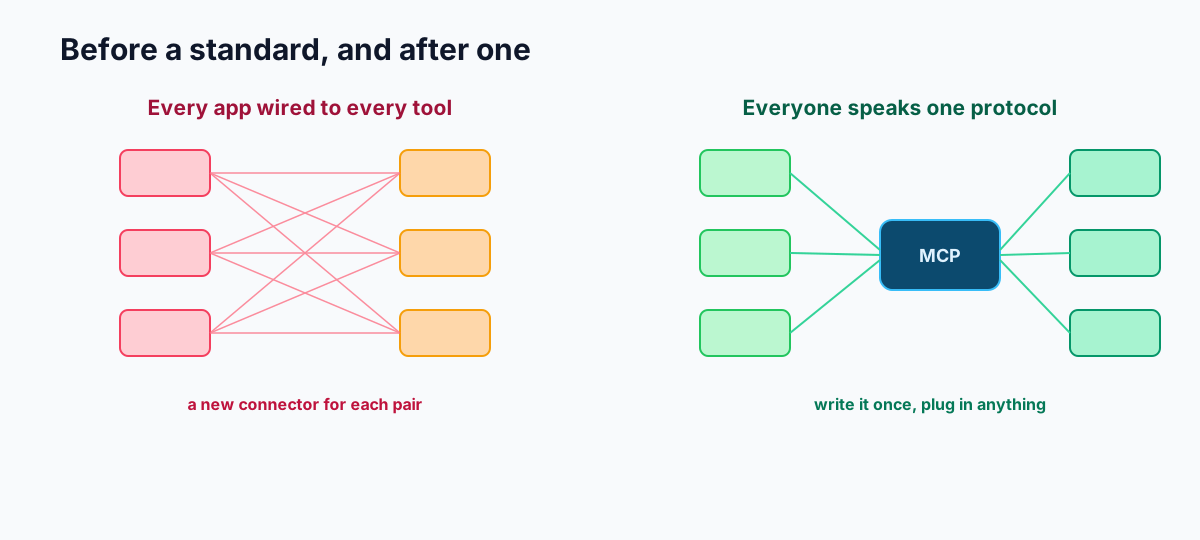
Imagine you are building AI features into several apps. You want your assistant to reach a database, a file store, a ticketing system, and a chat tool. Without a standard, each app needs its own custom connector to each tool. Three apps and four tools already means twelve separate integrations, and every one of them has to be maintained, updated, and debugged on its own. Add another tool and you are writing three more connectors.
This is the classic mess that standards exist to clean up. It is the same story as electrical plugs before a common socket, or devices before USB. Everyone reinventing the same wiring, slightly differently, forever.
The idea in one sentence
MCP says let us agree on one language for an AI application to ask a tool what can you do and please do this. A tool exposes its abilities through a small MCP server. An AI app connects as an MCP client. Because both sides speak the same protocol, any client can talk to any server without special casing.
Write a database server once, and every MCP aware assistant can use it. Build one assistant, and it can reach every MCP tool that exists, including ones written after your assistant shipped. The messy web of custom connectors collapses into a neat hub.
What a tool actually offers
An MCP server can expose a few different kinds of things, and they map neatly onto what an assistant needs.
The first is tools, meaning actions the model can take, like run a query, create a file, or send a message. The second is resources, meaning data the model can read, such as a document, a record, or a log. The third is prompts, meaning ready made templates a server can offer to guide the model through a common task.
When an assistant connects, it asks the server for this menu. From then on, the model can choose to call any item on it, and the results flow back into the conversation. The model is no longer guessing about your world. It is reading and acting on it directly.
Why an open standard is the point
It would have been easy for one company to build a closed version of this that only worked with its own model. MCP went the other way and was published as an open specification that anyone can implement. That openness is not charity, it is strategy. A standard is only useful if lots of people adopt it, and people adopt what they do not feel trapped by.
The result is a growing ecosystem where the same MCP server for, say, a project tracker works across different assistants and editors. You are not betting your integration work on a single vendor staying in business or staying friendly.
A note on safety
Handing a model the ability to read files and take actions is powerful, and power cuts both ways. If an assistant can delete a record or send a message, then a careless prompt, or a malicious document that tricks the model, could do real harm. This is why serious MCP setups keep a human in the loop for anything risky, scope each server to only what it needs, and treat the model's requests as suggestions to approve rather than commands to obey blindly.
The protocol gives you the plumbing. Deciding what water is allowed to flow through it is still your job.
Why it caught on
The reason MCP spread quickly is not that it is clever. It is that it is boring in the best possible way. It solves a dull, expensive, universal problem, and it does so with a small specification that a single developer can implement in an afternoon. That combination, a real pain and a low bar to adopt, is exactly what turns a proposal into a standard.
If the last few years were about making models smarter, this next stretch is about connecting them to the messy real world safely. MCP is one of the first pieces of that puzzle to feel like it will last.