
The first wave of AI in code editors was autocomplete on steroids. You typed, and a suggestion floated in to finish your line. Genuinely useful, but still a tool you drove one keystroke at a time. What arrived next is a different animal. You give it a goal in plain language, walk away for a few minutes, and come back to find files edited, tests run, and a summary of what it did. That is a coding agent, and understanding the loop behind it explains both why it feels like magic and where it still needs a firm hand.
From suggestion to worker
The leap is from finishing your sentence to finishing your task. Autocomplete predicts the next few tokens based on what you have written. An agent takes an instruction like add a login page and make the existing tests pass, then figures out the many steps that goal implies and carries them out.
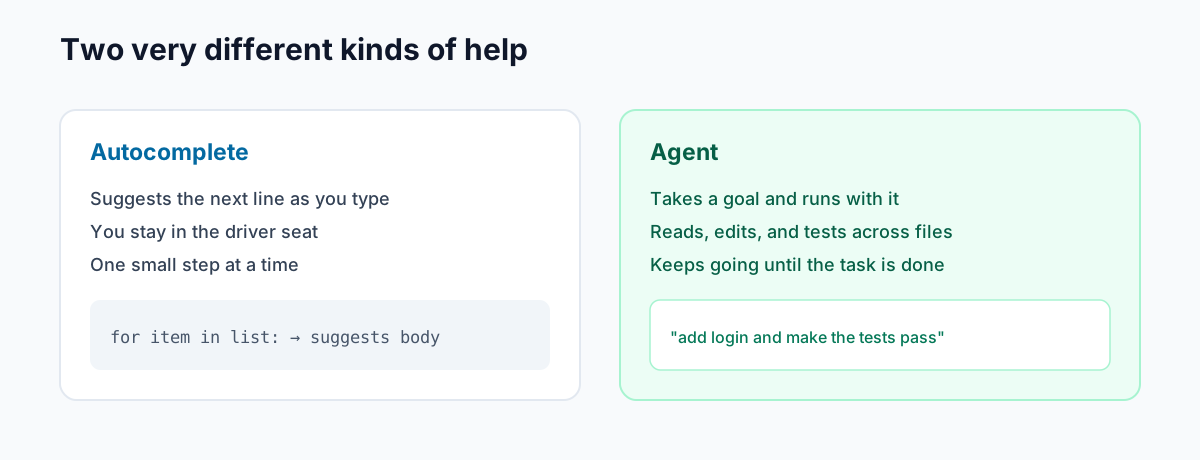
The difference is not that the underlying model got a hundred times smarter overnight. It is that we wrapped the model in a loop and handed it tools.
The loop at the heart of every agent
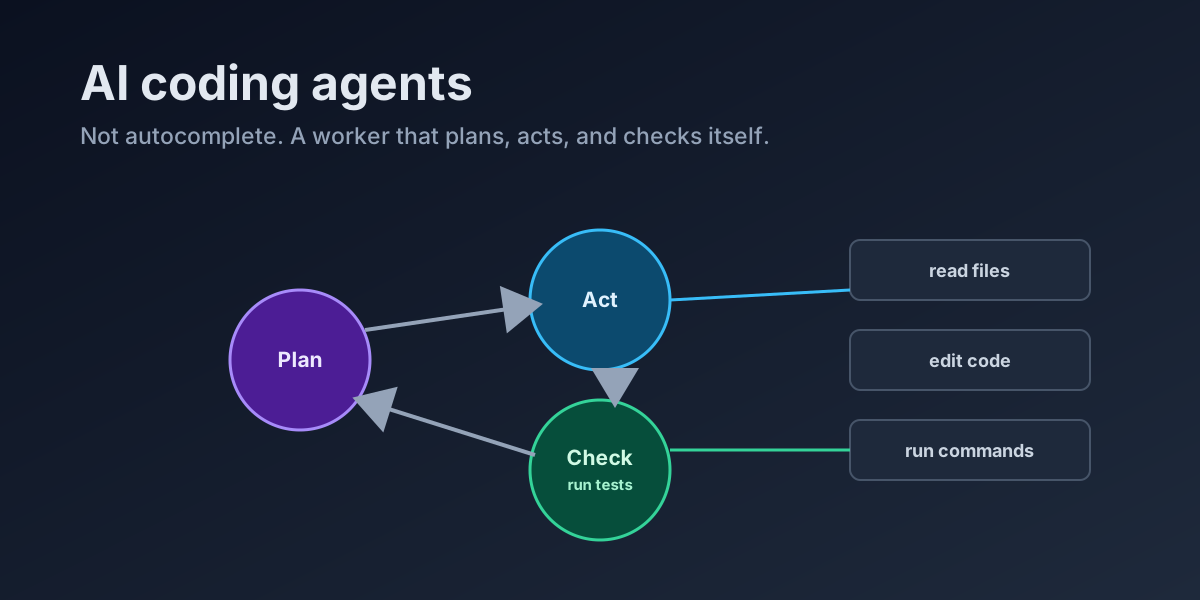
Strip away the branding and almost every coding agent runs the same simple cycle, over and over, until the job is done.
It starts by making a plan. Given your goal and a look at the project, the model decides on a first step. Then it acts, using a tool to actually do something in the real world, like opening a file, editing a function, or running a command in the terminal. Crucially, it then observes the result. Did the file contain what it expected? Did the tests pass or throw an error? That feedback goes back into the model, which updates its plan and takes the next step.
Plan, act, check, repeat. This little wheel is the whole idea. A model that can see the outcome of its own actions can correct course, and correcting course is what separates a helpful assistant from a party trick.
Tools are what make it real
A language model by itself can only produce text. The reason an agent can change your project is that it has been given a set of tools it is allowed to call, and each tool connects its words to an action.
Reading a file lets it understand your actual code rather than guessing. Editing lets it make precise changes. Running a command lets it install a package, start the app, or run the test suite. Searching lets it find where something lives across a large codebase. When the model writes I will run the tests now, the harness around it truly runs them and feeds the pass or fail back in. That grounding in real results is why an agent can fix a bug it introduced two steps earlier.
Why the check step matters most
If I had to point to the single thing that makes agents trustworthy, it would be that observe step. A model working blind will happily write code that looks right and does not run. An agent that runs the tests, sees the red, reads the error, and tries again is doing something much closer to what a human developer does. It is not that it never makes mistakes. It is that it can notice them and keep going.
This is also why the best results come from tasks that have a clear way to check success. Make the tests pass gives the agent a target it can verify. Make this code better does not, so it tends to wander. If you want good work from an agent, give it a goal it can measure itself against.
What actually changes for the developer
The fear is that this replaces developers. What I see in practice is that it moves the work up a level. Less time spent typing boilerplate, wiring up routine changes, and hunting through unfamiliar files. More time spent deciding what should be built, reviewing what the agent produced, and handling the genuinely hard design calls that need judgement.
The skills that rise in value are describing a problem clearly, breaking a big task into checkable pieces, and reading a diff critically. An agent is fast and tireless, but it has no stake in your product and no memory of last week's painful outage. It will confidently do exactly what you asked, including the parts you did not mean. Reviewing its work is not optional.
A fair way to think about it
Treat a coding agent like a talented junior who works at incredible speed, never gets bored, and needs everything checked before it ships. Give it a crisp task with a clear finish line, let it grind through the loop, then review the result as you would any colleague's pull request. Used that way, it is one of the biggest jumps in day to day productivity that software has seen in a long time. Handed the keys with no supervision, it will eventually drive into a wall at full speed.
The loop is simple. The judgement about when to trust it is the part that stays firmly yours.